

Have you ever stood next to a massive paper machine running at high speed and wondered what exactly keeps that continuous sheet of pulp from sticking to the machinery? It’s a marvel of engineering, really. To be honest, among all the high-tech alloys and synthetic polymers used in modern manufacturing, one of the most critical components remains something remarkably ancient: natural stone. Specifically, the Granite Stone Roller Paper Machine Rolls Stone Roller for Paper Mill has stood the test of time as a cornerstone of the industry.
Interestingly enough, despite the advent of advanced ceramics and rubber-coated composites, many mill managers still swear by the natural properties of granite. There is something about the unique mineral composition of natural stone that synthetic materials struggle to replicate perfectly. In my experience, the transition from a wet fiber mat to a cohesive sheet of paper requires a very specific type of surface tension and release property, and that is exactly where the granite roller shines.
In this comprehensive guide, we are going to dive deep into the world of these massive stone cylinders. We will explore why they are chosen, how they are manufactured to such exacting standards, and how they contribute to the overall paper mill press section efficiency. Whether you are an industry veteran or someone new to the world of pulp and paper, there is a lot to uncover about these heavy-duty giants.
The Unrivaled Legacy of Granite in Papermaking
It’s worth noting that the use of stone in papermaking isn't just a tradition; it’s a choice driven by physics. Granite is a plutonic igneous rock, formed from the slow crystallization of magma below the Earth's surface. This slow cooling process creates a coarse-grained structure consisting mainly of quartz, feldspar, and mica. But why does this matter for a paper mill?
Frankly speaking, the "release" property is the most vital characteristic. When the wet paper web passes through the press section, it is under immense pressure. If the roller surface is too smooth or has the wrong chemical affinity, the paper will stick, leading to "sheet breaks" that can shut down a multi-million dollar production line for hours. The natural porosity and mineral distribution of a Granite Stone Roller Paper Machine Rolls Stone Roller for Paper Mill provide just enough microscopic "air pockets" to allow the paper to peel away cleanly.
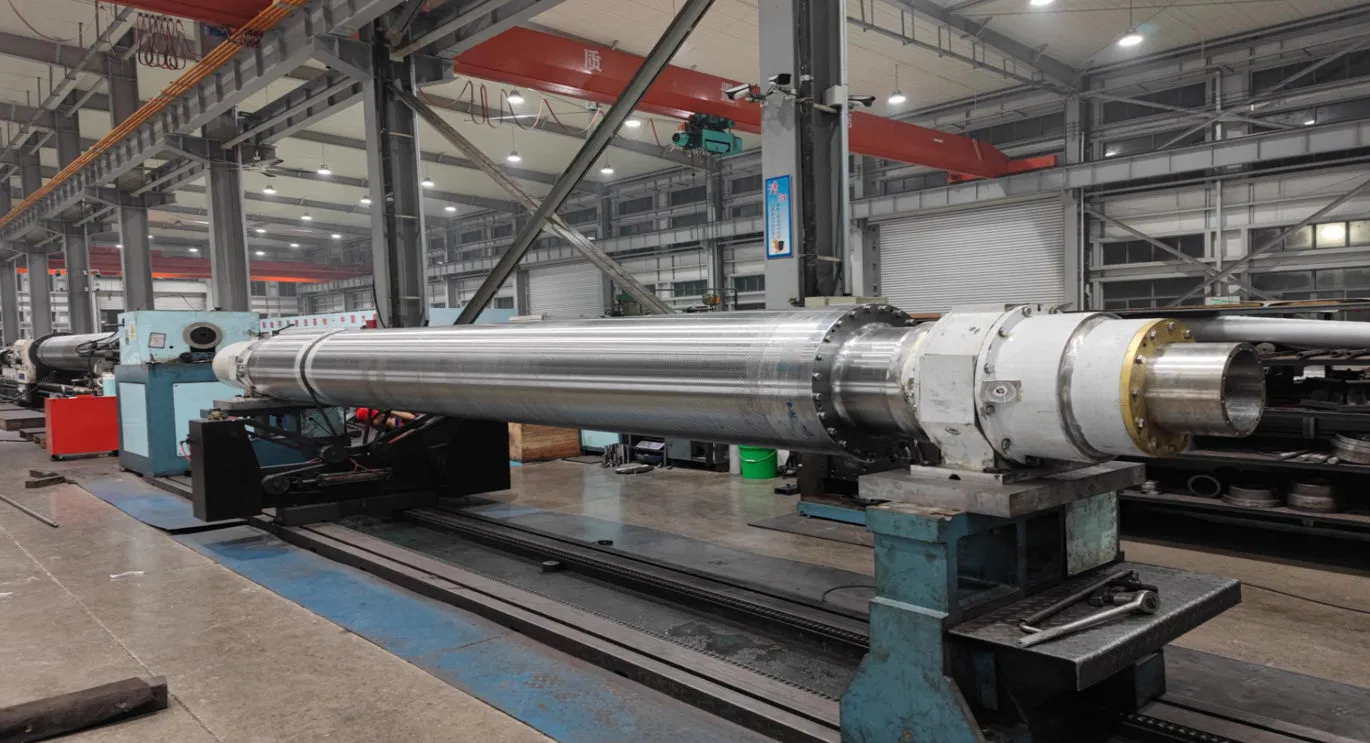
Furthermore, granite is incredibly hard and resistant to wear. In an environment where the roller is constantly subjected to the abrasive action of doctor blades (which scrape the surface clean) and the chemical onslaught of various pulping additives, durability is non-negotiable. Many experts agree that a well-maintained granite roll can last for decades, outperforming many of its synthetic counterparts in terms of total lifecycle cost.
Engineering Excellence: How These Rolls are Crafted
You might be asking, "How do you turn a massive block of mountain into a precision-engineered industrial tool?" It is a fascinating process that blends raw power with extreme delicacy. It starts at the quarry, where specific veins of granite—often selected for their uniform grain and lack of fissures—are harvested. Not all granite is created equal; for a paper mill, the stone must be exceptionally homogenous.
Once the raw block is extracted, it undergoes several stages of transformation:
- Rough Turning: The block is mounted on a massive lathe where specialized diamond-tipped tools shave away the excess stone to create a rough cylinder.
- Core Boring: Most high-precision natural granite rolls are not solid stone all the way through. A central shaft, usually made of high-grade steel, is inserted through a bored-out center. This provides the necessary structural integrity to handle the rotational torque and mounting requirements.
- Precision Grinding: This is where the magic happens. The roll is ground down to a tolerance of microns. The surface must be perfectly concentric to ensure that the pressure applied to the paper web is uniform across its entire width.
- Polishing: Depending on the type of paper being produced (e.g., fine writing paper vs. heavy cardboard), the surface is polished to a specific "Ra" (roughness average) value.
I've found that the balancing act is perhaps the most critical part of the manufacturing process. Because these rolls can weigh several tons and spin at high velocities, even a tiny imbalance can cause vibrations that would ruin the paper quality or, worse, damage the machine bearings. Dynamic balancing is performed to ensure smooth operation at the mill's specific operating speeds.
Maximizing Paper Mill Press Section Efficiency with Natural Stone
The press section is arguably the most energy-intensive part of the papermaking process. Its job is to squeeze as much water out of the web as possible before it hits the drying cylinders. Every percentage point of water removed in the press section saves a massive amount of steam energy in the dryers. This is where the Granite Stone Roller Paper Machine Rolls Stone Roller for Paper Mill plays its starring role.
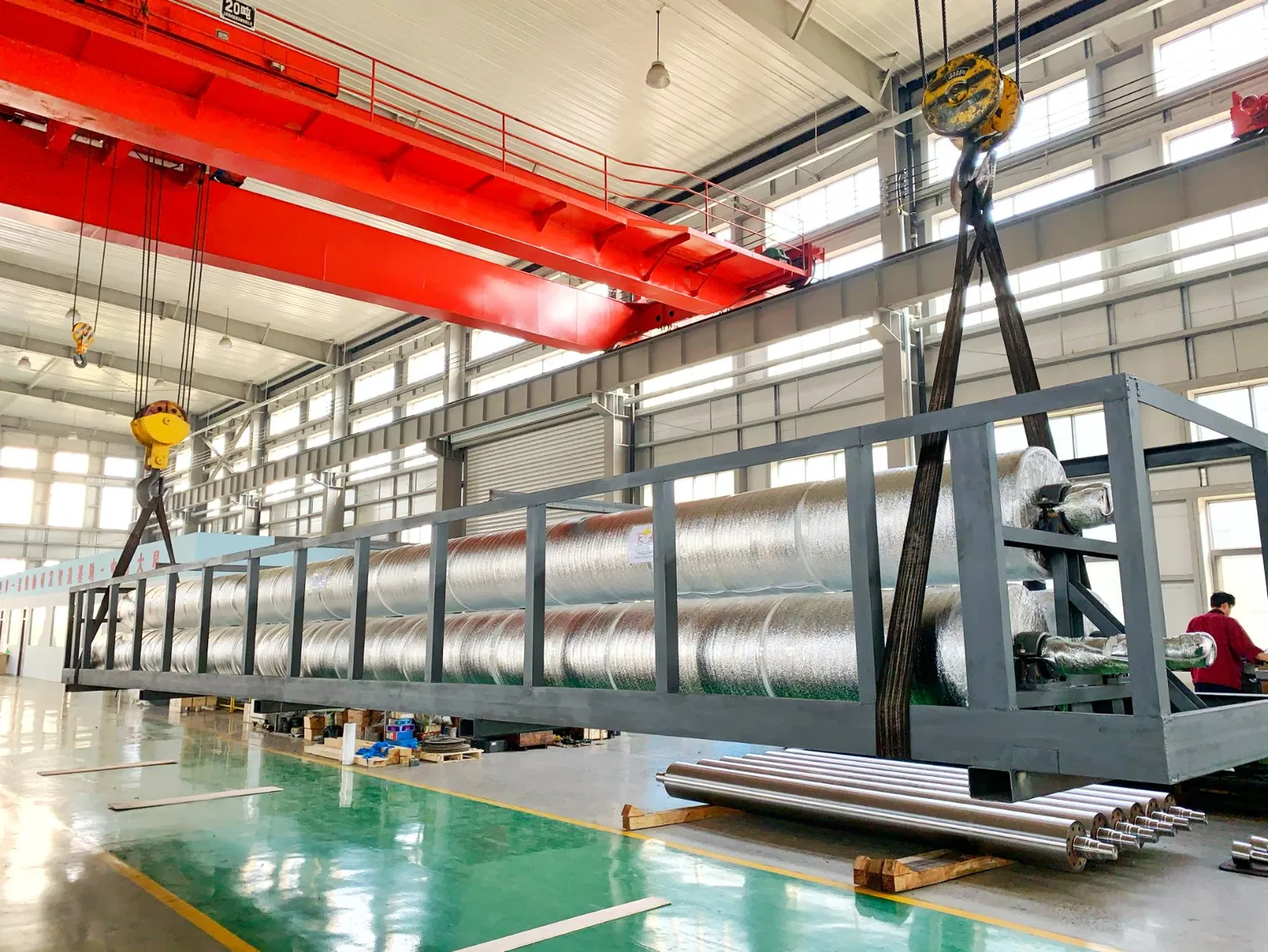
Because granite is naturally stiff, it does not deform easily under the high "nip" pressures required to dewater the paper. This rigidity ensures that the moisture profile of the paper remains consistent from the left edge to the right edge. Have you ever noticed how some paper feels slightly damp or wavy on one side? That is often a result of uneven pressure in the press section, something that high-quality stone rollers help to prevent.
Interestingly enough, the thermal stability of granite is another hidden advantage. Paper mills are hot, humid environments. Metals expand and contract significantly with temperature fluctuations, which can alter the "crown" or shape of the roller. Granite has a much lower coefficient of thermal expansion, meaning it stays true to its shape even as the mill heats up during a long production run. This stability is a key factor in maintaining paper mill press section efficiency over 24/7 operations.
Maintenance Secrets for Durable Stone Rollers for Industrial Papermaking
While granite is incredibly tough, it isn't invincible. If you want to get the most out of durable stone rollers for industrial papermaking, you have to treat them with respect. The primary "enemy" of a granite roll is actually the doctor blade—the metal or composite strip that keeps the roll surface clean of fiber buildup.
If the doctor blade pressure is too high, or if the blade material is too abrasive, it can "score" the granite. Once a scratch starts, it can trap fibers and lead to localized sticking. In my experience, the most successful mills are those that have a rigorous schedule for inspecting and regrinding their stone rolls. Regrinding involves removing a tiny layer of the stone's surface to restore its perfect geometry and roughness profile.
Another factor to consider is chemical exposure. While granite is generally resistant to most papermaking chemicals, extreme pH levels can eventually affect the mica and feldspar components of the stone. It’s worth noting that keeping a consistent chemical environment not only helps the paper quality but also extends the life of your Granite Stone Roller Paper Machine Rolls Stone Roller for Paper Mill. Regular cleaning with specialized, non-corrosive agents is a must to prevent the buildup of "pitch" or "stickies" that can transfer from the recycled pulp.
Granite vs. Synthetic: Why Natural Stone Still Wins
It is a question I get asked often: "Why don't we just use a synthetic cover?" To be fair, synthetic rolls (like those covered in polyurethane or specialized rubber) have their place. They are lighter and can be easier to repair. However, they simply cannot match the "release" characteristics of natural granite for certain grades of paper.
Synthetic covers are essentially "smooth" at a molecular level, which can create a vacuum effect, making the wet paper stick to the roll like a suction cup. Granite’s crystalline structure prevents this. Furthermore, synthetic covers can suffer from "delamination," where the cover peels away from the metal core due to heat or pressure. A granite roll is a solid mass; there is no cover to peel off. This inherent structural integrity makes it the preferred choice for high-speed machines where the stakes are highest.
Frankly speaking, when you look at the long-term ROI (Return on Investment), the Granite Stone Roller Paper Machine Rolls Stone Roller for Paper Mill often comes out on top. While the initial investment and the logistics of moving such a heavy object are significant, the lack of frequent recovering costs and the superior paper quality usually justify the expense for most high-output mills.
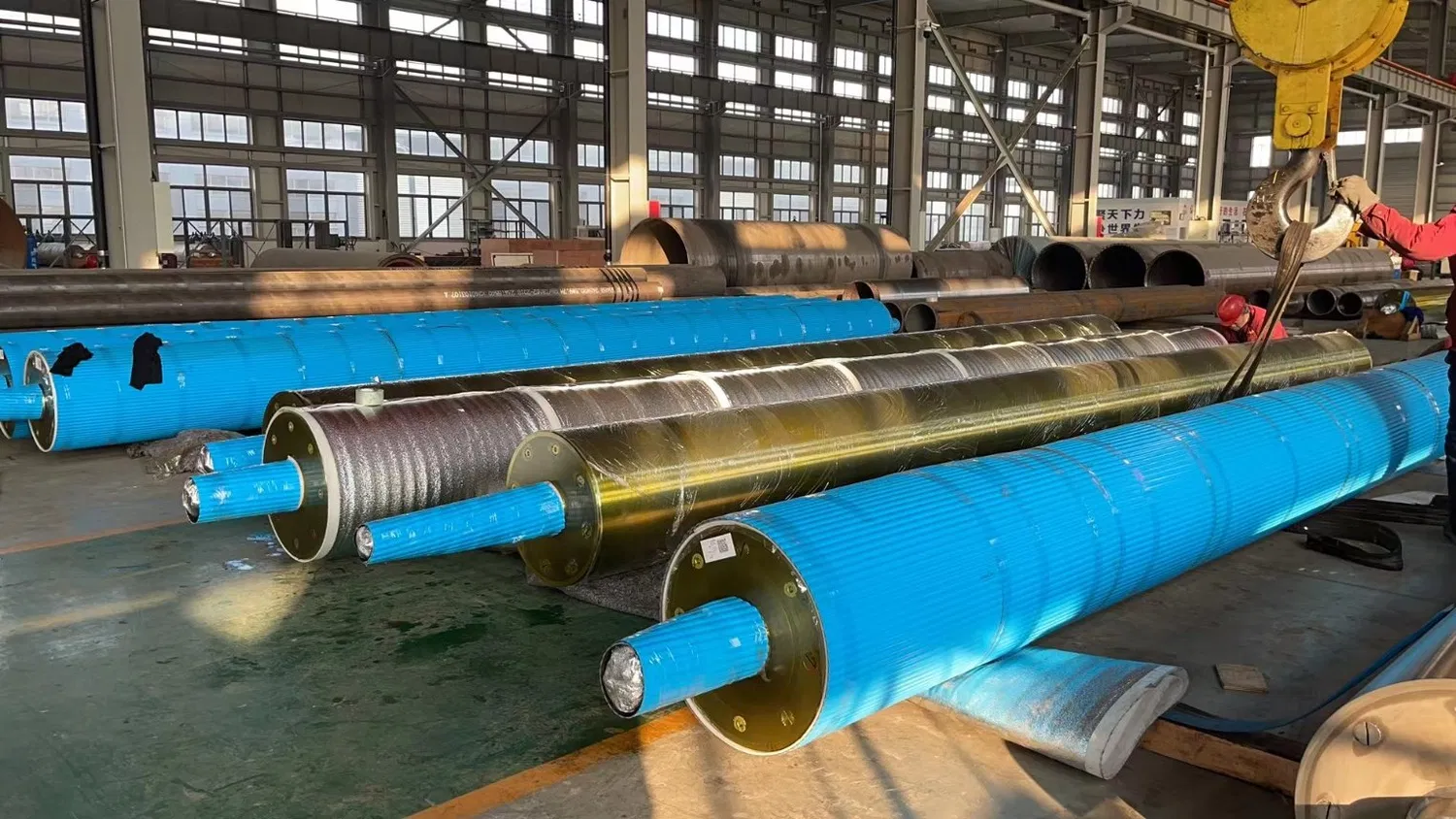
The Future of Pressing Technology
As we look toward the future, the papermaking industry is under increasing pressure to become more sustainable and energy-efficient. You might think this would lead to the phase-out of "old-fashioned" stone, but the opposite is true. Engineers are finding new ways to optimize the use of granite. For instance, new types of composite doctor blades are being developed specifically to be "gentle" on stone surfaces, further extending the time between regrinds.
Moreover, the move toward more recycled fiber content in paper production actually makes the granite roll more relevant. Recycled pulp often contains more contaminants—adhesives, inks, and plastics—that tend to stick to synthetic surfaces. The unique surface energy of granite makes it more "forgiving" when processing these challenging fiber sources. It’s a classic example of a traditional material solving a modern problem.
In conclusion, the Granite Stone Roller Paper Machine Rolls Stone Roller for Paper Mill is far from an artifact of the past. It is a sophisticated, high-performance component that remains vital for the production of high-quality paper. Its combination of hardness, thermal stability, and unique release properties makes it an indispensable asset. If you are looking to improve your paper mill press section efficiency and ensure long-term reliability, the natural choice—quite literally—is granite.
For more detailed information, please visit our official website:Granite Stone Roller Paper Machine Rolls Stone Roller for Paper Mill
About the author: Arthur Sterling is a Senior Mechanical Engineer with over 28 years of experience specializing in heavy industrial machinery for the pulp and paper sector. Having consulted for some of the largest paper mills across North America and Asia, Arthur possesses a deep understanding of roll dynamics and material science. He is a frequent contributor to industrial trade journals and is passionate about blending traditional engineering wisdom with modern manufacturing innovations to optimize production efficiency.