

As the technical director of a company dedicated to high-performance industrial components, I spend a significant portion of my time in direct consultation with plant managers, maintenance supervisors, and procurement leaders. The conversation frequently centers on a critical operational decision: the choice between polyurethane vs rubber roll covers for press section applications. This isn't merely a materials science debate; it's a strategic decision that directly influences production uptime, product quality, maintenance costs, and ultimately, profitability. In this article, we will move beyond surface-level comparisons to provide a deep, engineering-focused analysis, demonstrating how our integrated approach to design, manufacturing, and service delivers a clear competitive advantage for your operations.
For too long, many have viewed roll covers as simple consumable parts, accepting frequent replacements and unscheduled downtime as a necessary evil. Our philosophy is different. We see every roll cover as a precision-engineered system component. The right choice, tailored to your specific application, can transform a recurring operational headache into a source of stability and efficiency. This guide will walk you through the critical factors we analyze and the solutions we engineer to ensure you extract maximum value from your investment.
The High Stakes of Press Section Performance: Diagnosing Common Failures
The press section is the heart of many web-based production lines, from paper manufacturing to textile finishing and metal processing. The performance of your roll covers in this unforgiving environment dictates the consistency of your final product. When a roll cover fails, the consequences are immediate and costly. The debate over polyurethane vs rubber roll covers for press section is so vital because the failure modes of each material are distinct, and understanding them is the first step toward a solution.
In our diagnostic work with new clients, we consistently encounter a handful of recurring problems rooted in suboptimal roll cover selection or manufacturing quality:
- Premature Abrasion and Wear: This is a classic issue, particularly with certain rubber compounds in high-speed or high-pressure applications. The cover surface wears down unevenly, leading to a loss of crown profile and inconsistent nip pressure. This directly causes product defects like caliper variations or uneven moisture profiles. We trace this back to a material's insufficient abrasion resistance for the specific substrate and operational speed.
- Chemical Swelling and Degradation: In printing, coating, or chemical treatment lines, roll covers are exposed to a cocktail of solvents, inks, and cleaning agents. Many conventional rubber materials will absorb these chemicals, causing them to swell, soften, or become tacky. This not only ruins the roll but can also contaminate the product. Polyurethane, when properly formulated, offers a significant advantage here.
- Delamination and Bond Failure: This is a catastrophic failure where the cover separates from the metal roll core. The root cause is almost always a failure in the bonding process—improper core preparation, incompatible bonding agents, or inadequate curing protocols. It’s a manufacturing defect, plain and simple, and one that our quality systems are designed to eliminate entirely.
- Glazing and Loss of Surface Texture: Over time, a roll surface can become smooth and polished, a phenomenon known as glazing. This reduces the coefficient of friction, leading to sheet slippage and tension control problems. It’s often a result of a combination of pressure, heat, and chemical exposure that the material was not designed to withstand.
Are you accepting any of these issues as a standard cost of doing business? Our engineering team begins every project by diagnosing these symptoms to understand the true operational challenge. We don't just sell a product; we engineer a solution to a specific performance problem, ensuring the material and design are perfectly matched to the application's demands.
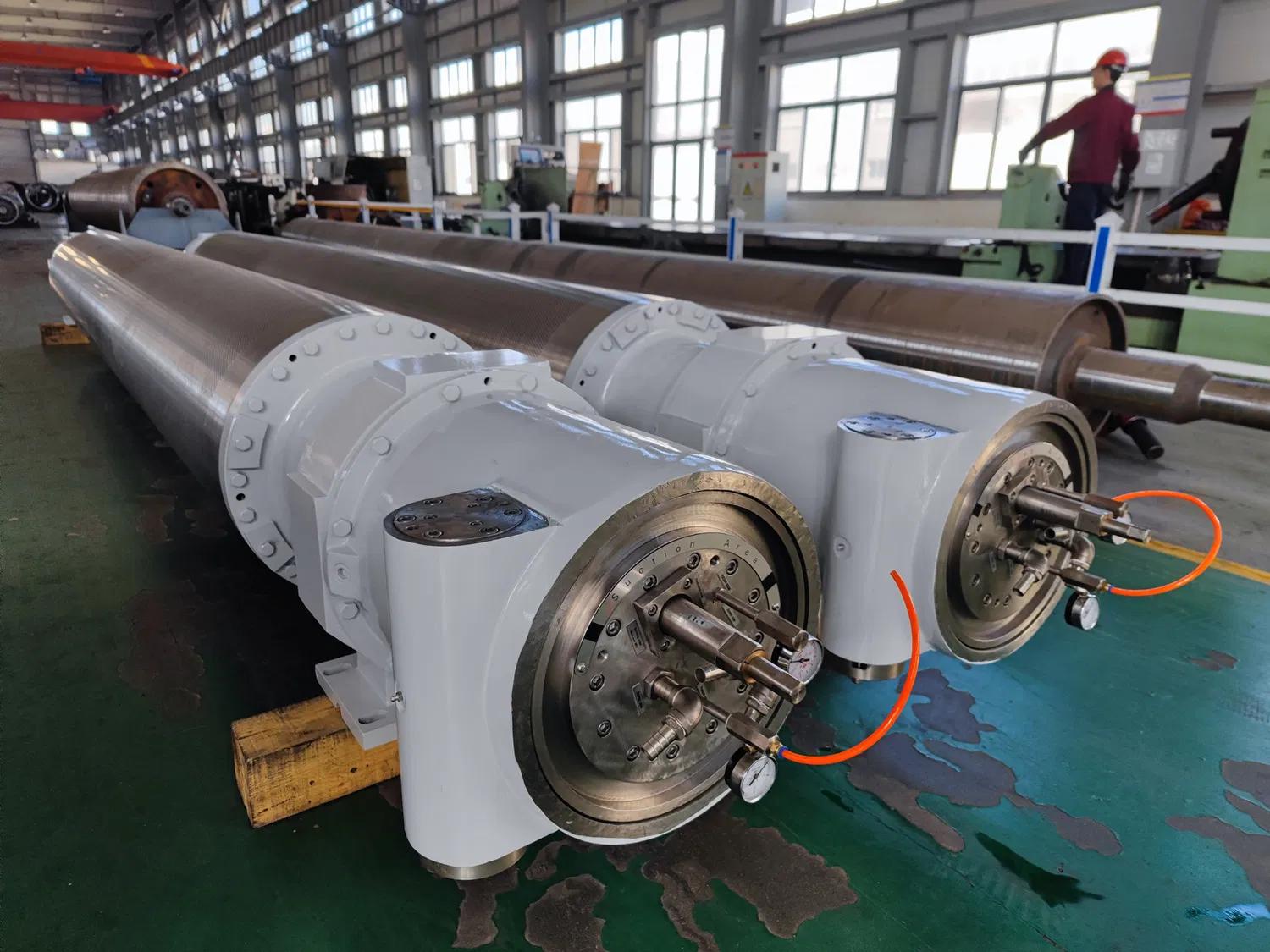
Our Engineering Blueprint: From Material Science to Precision Dynamics
The core of our value proposition lies in our deep, multi-disciplinary engineering expertise. We don't just choose between off-the-shelf polyurethane and rubber; we design and formulate materials and then engineer the entire roll system for optimal dynamic performance. This is where our clients see a tangible difference in longevity and consistency.
Advanced Material Formulation
Our material scientists have developed a portfolio of proprietary polyurethane formulations, each engineered for specific challenges. Unlike generic suppliers, we don't believe in a one-size-fits-all approach. During a recent retrofit project for a flexible packaging converter, their existing rubber rolls were failing due to ketone-based ink solvents. Our team selected and customized a specific polyether-based polyurethane formulation with proprietary cross-linking technology that exhibited near-zero swelling and degradation in lab immersion tests. This formulation extended the roll's service life from four months to well over eighteen months.
Our polyurethane compounds consistently outperform conventional rubber in key areas:
- Superior Abrasion Resistance: Our high-performance PU formulations can offer up to 3-5 times the abrasion resistance of natural rubber or SBR, drastically reducing wear in demanding applications.
- Exceptional Load-Bearing Capacity: Polyurethane can be formulated to handle extreme nip pressures without permanent deformation (compression set), maintaining a stable nip profile over millions of cycles.
- Tailorable Rebound and Hysteresis: We can fine-tune the dynamic properties of the cover to control heat buildup. For high-speed applications, we engineer low-hysteresis compounds that run cooler, preventing thermal degradation and maintaining dimensional stability.
Precision Mechanical Engineering
A superior material is only as good as its application. Our mechanical engineering team uses Finite Element Analysis (FEA) to simulate the stresses and strains on the roll cover under your specific operational loads, speeds, and temperatures. This allows us to optimize the cover thickness, crown profile, and core bonding interface before any material is ever cast.
This digital-first approach enables us to guarantee industry-leading mechanical tolerances. Every roll that leaves our facility is verified to meet exacting specifications, including our standard of 0.01 mm concentricity control (Total Indicated Runout). This level of precision is non-negotiable for ensuring uniform nip pressure across the entire web, which is critical for eliminating defects and ensuring consistent product quality. In our fatigue lab, our standard press roll assemblies are validated to endure over 5,000 operational hours at peak load without measurable degradation in performance.
From Theory to Reality: Proven Performance in the Field
Our engineering principles are validated every day on production floors around the world. Here are two examples illustrating how our approach delivers measurable ROI.
Case Study 1: High-Speed Paper Mill Press Section
A major containerboard producer was struggling with their lumpbreaker roll in the press section. The existing high-hardness rubber cover was wearing rapidly due to the abrasive nature of the pulp, requiring a costly replacement every 3-4 months. Each replacement meant 8 hours of unscheduled downtime. Our team conducted a full application review, analyzing the machine speed, nip load, and pulp composition. We proposed a custom-formulated, high-rebound polyurethane cover. The result? The new PU cover has been in service for over 15 months and shows minimal wear. The client eliminated three roll changes per year, saving over 24 hours of downtime and significantly reducing their annual maintenance budget, directly proving the value of a targeted solution when considering polyurethane vs rubber roll covers for press section performance.
Case Study 2: Specialty Film Coating Application
A manufacturer of specialty optical films required an applicator roll with extreme chemical resistance and a flawless surface finish. Their nitrile rubber rolls were swelling from exposure to aggressive cleaning solvents, causing microscopic surface defects that were unacceptable in the final product. The challenge was to find a material that was both chemically inert and could be ground to a mirror-like finish. Our solution was a dual-layer polyurethane cover: a harder base layer for dimensional stability and a softer, specially formulated top layer for chemical resistance and application properties. By optimizing the polyurethane vs rubber roll covers for press section in this high-abrasion and chemical-exposure environment, we delivered a roll that not only eliminated the swelling issue but also improved the coating uniformity, reducing their product rejection rate by 7%.
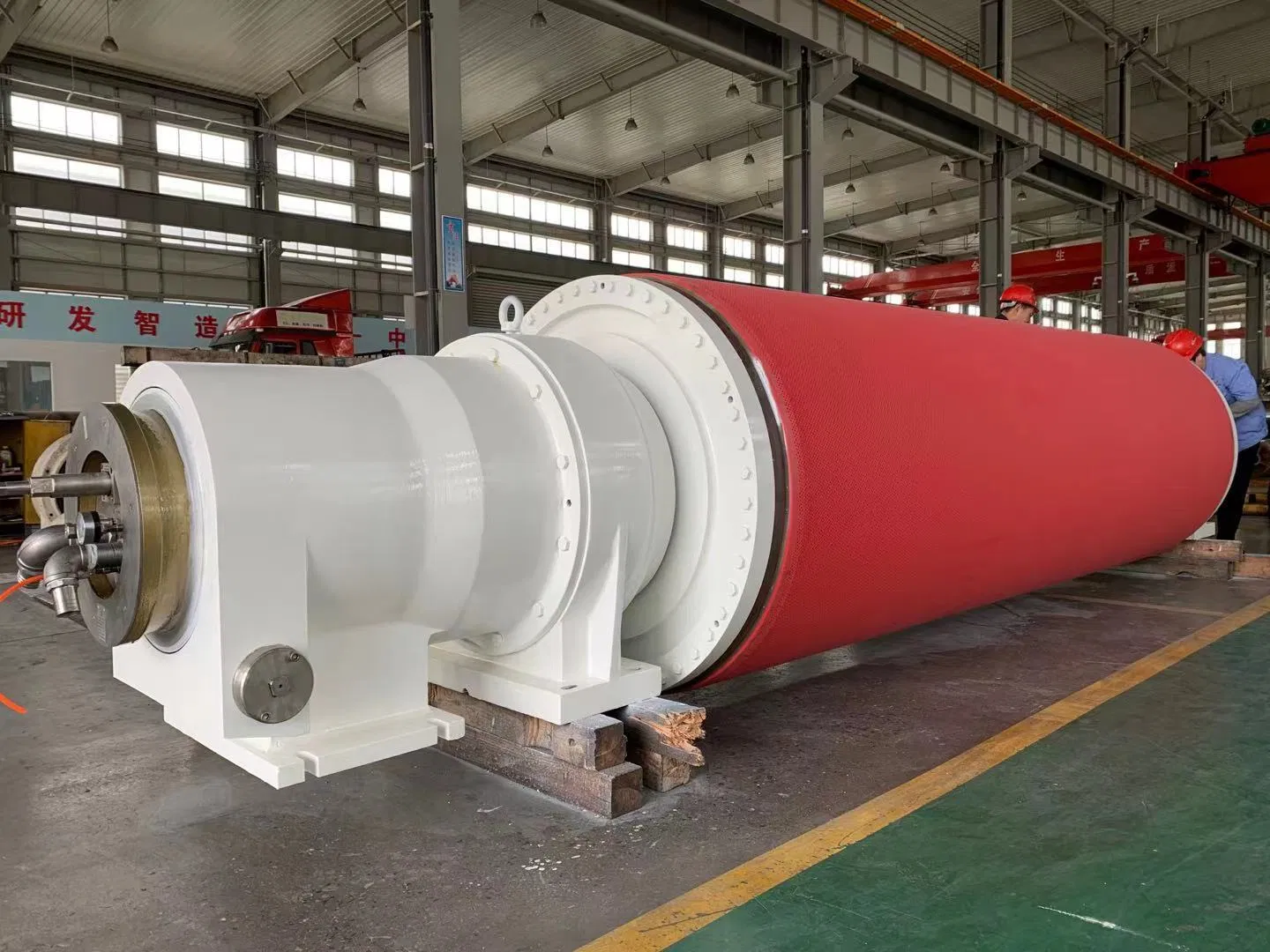
The Backbone of Reliability: Our Manufacturing & Quality Assurance Protocol
A brilliant design is meaningless without a manufacturing process that can execute it flawlessly and repeatably. Our production facility is built on a foundation of process control, automation, and data-driven quality assurance. This is how we translate engineering specifications into reliable, long-lasting products.
Our process begins with meticulous preparation of the roll core, using automated surface texturing to create the optimal profile for mechanical bonding. Our polyurethane casting process is managed in a climate-controlled environment with automated mixing and degassing systems to ensure a void-free, homogenous cover material every time. After a precisely controlled curing cycle, the rolls are moved to our CNC grinding cells. Here, the final profile and surface finish are achieved with incredible accuracy.
Quality is not an afterthought; it's embedded in every step. We employ a system of digital traceability, where every roll is tracked from raw material batch to final inspection report. Our final quality control gateway includes a battery of tests:
- Hardness and Rebound Verification: Confirming the material properties match the engineering specification.
- Dynamic Balancing: Ensuring the roll will run smoothly at operational speeds, preventing vibration that can cause barring and other defects.
- 100% Laser Profilometry Inspection: Every single roll is scanned with non-contact laser micrometers to verify its diameter, concentricity, and crown profile against the design blueprint. This data is archived for future reference and trend analysis.
This rigorous, data-backed process is our guarantee to you. When you receive a roll from us, you can be confident that it is mechanically perfect and ready to perform.
Your Partner in Production: Service, Customization, and Actionable Guidance
We believe our responsibility extends beyond shipping a product. We function as an extension of your engineering and maintenance teams. Our service model is built on collaboration and technical support, ensuring you not only get the right product but also the best performance from it.
Our process is consultative. Whether you have a single roll or need to outfit an entire production line, our application engineers work with you to define the requirements. We accommodate a wide range of needs, from prototype development with flexible minimum order quantities (MOQs) to scheduled blanket orders for large-scale operations. We establish clear communication channels and provide tiered lead time options based on project complexity, ensuring transparency from quotation to delivery. Our global logistics network ensures reliable and timely delivery to your facility, wherever it may be.
To help you make an informed decision, here is a checklist for evaluating your next roll cover supplier:
- Material Expertise: Do they formulate their own materials or just use generic compounds? Can they provide data on chemical compatibility and physical properties?
- Engineering Capability: Do they offer design support like FEA or failure analysis? Can they engineer a custom crown profile for your specific needs?
- Manufacturing Tolerances: What are their standard tolerances for concentricity, diameter, and surface finish? Can they provide documented proof?
- Quality Assurance: What is their inspection process? Do they perform dynamic balancing and provide a full inspection report with each roll?
- Technical Support: Is there an experienced engineer you can speak with to diagnose problems and discuss application requirements?
Ultimately, the discussion around polyurethane vs rubber roll covers for press section is about finding a partner who understands the intricate relationship between material science, mechanical engineering, and your production reality. It’s about moving from a reactive, replacement-focused mindset to a proactive, performance-driven strategy. We are equipped and eager to be that partner.
We invite you to challenge your current roll cover performance. Let our engineering team analyze your application and demonstrate the tangible benefits—in uptime, quality, and cost—that a precisely engineered solution can deliver. Let's start a technical conversation today.
For more detailed information, please visit our official website:polyurethane vs rubber roll covers
About the author: As the Technical Director with over 20 years of experience in industrial material science and polymer engineering, I lead a dedicated team focused on solving complex operational challenges for our clients. My work centers on developing high-performance polyurethane and elastomer solutions for demanding applications in paper, film, and manufacturing industries. I am passionate about translating advanced engineering principles into measurable improvements in production efficiency and reliability for our partners around the globe. ---